


What's the Difference Between Berkey and British Berkefeld?
When it comes to choosing a stainless steel gravity-fed water filter system, you will likely discover two key contenders on the market: Berkey and British Berkefeld. Two brands that look and feel incredibly similar in design, with one key difference: the filter element inside and the associated certifications.
What makes the filters different? It's mainly down to the materials used and the levels of testing carried out to ensure that customers can be confident in the systems performance and their contaminant reduction.
So, let's delve into the detail together and discover more about the comparisons between Berkey and British Berkefeld. Read on as we compare their technology, performance, and value to help you to make an informed decision when choosing a gravity water filter system.
A Brief Overview of British Berkefeld and Berkey:
The roots of British Berkefeld trace all the way back to Germany in the 1800s. Wilhelm Berkefeld, a German Engineer, developed the original Berkefeld filter systems to fight cholera. Fast forward to the modern day, and British Berkefeld is a brand that is now part of the Doulton Water Filter family. All of the Doulton and British Berkefeld products are made in a manufacturing facility in Staffordshire and hold the Made in Britain badge.
Berkey, made by New Millennium Concepts Ltd, was launched in America in the 90's, originally distributing British Berkefeld filters before developing its own water filtering element and expanding their range into more systems and sizes (source).
The key differences lie in what’s inside the filters and how their performance is verified. British Berkefeld’s Ultra Sterasyl and Ultra Fluoride filters use a true ceramic outer shell with carbon block core, and carry independent certifications from organisations such as NSF. Berkey’s filter is reportedly made of a a carbon composite containing coconut shell carbon combined with a blend of unspecified media and hold no official NSF/ANSI certifications

Berkey and British Berkefeld Are Both Gravity Water Filter Systems
Gravity water filter systems work by filtering tap water from a top chamber, through filters, into a bottom chamber. Using the power of gravity to pull the water through, the more you keep them topped up, the faster the filtering process will be.
British Berkefeld gravity filter systems are available in a range of sizes These include a 1 litre, 6 litre, 8.5 litre and 12 litre options. You can enhance the systems through a range of accessories available, including a stainless steel tap, stainless steel stand, sight gauge and even with an insulated sleeve.
The 1 litre system contains one filter, which is perfect for filtering in any location, such as a lodge or holiday home. The other systems contain anything from 2 filters to 4 filters to allow for enhanced filtration in larger capacities. The more filter candles placed into the British Berkefeld systems, the faster the water will filter through.
Berkey water filters are also available in a range of sizes and use the same concept. The water does move from the top chamber through to the bottom much faster due to the material that the filters are made from.

British Berkefeld Water Filters
As mentioned, British Berkefeld is a name steeped in history. Providing expert water filtration for generations, the brand is owned by Doulton - Pioneers in the world of ceramic water filters since 1826.
With a strong heritage of British engineering and innovation, British Berkefeld have two core gravity filter systems available: The Ultra Sterasyl and Ultra Fluoride. The brand’s ceramic filters, combined with activated carbon, provide a thorough and certified approach and British Berkefeld's commitment to quality is evident through generations of experience combined with the highest levels of testing with NSF certification.
British Berkefeld systems can be slower to filter than the Berkey systems due to the nature of the filter technology. Ceramic is a natural, porous material that requires conditioning before use, and 'wetter' the filters become, the faster the water will flow into the bottom chamber of the water filter system.

British Berkefeld Stand


British Berkefeld Ultra Fluoride


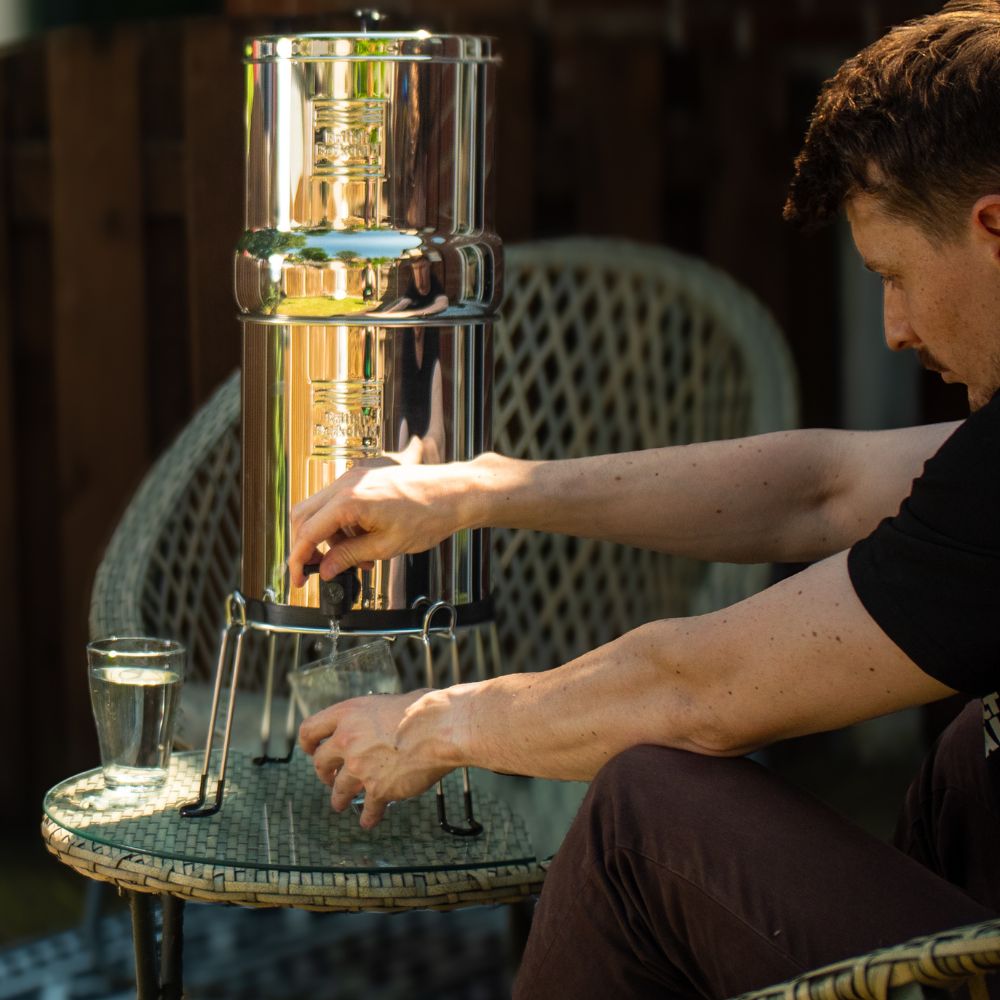
British Berkefeld Ultra Sterasyl


Berkey Water Filters
Berkey filters started in 1999 with a range of stainless steel gravity filter systems. The brand name Berkey was taken from a distribution partnership with the British Berkefeld brand - who's origins date back to the 19th century. British Berkefeld and Berkey not associated in any other way.
Quickly growing in popularity in the US, Berkey systems are designed to provide reliable and efficient water filtration, particularly in environments where access to clean water can be a challenge. Berkey systems are popular among outdoor enthusiasts and 'prepper' communities. The filter elements use carbon block technology, which is specifically engineered to address taste and odour of your drinking water.
As the filter element itself is much simpler with no additional layers such as ceramic, the water will pass through the filters much quicker than with the British Berkefeld ceramic filter systems.
Berkey vs British Berkefeld Comparison Table
| Feature | Berkey | British Berkefeld |
|---|---|---|
| Filtration Technology | Carbon blocks | Ceramic filters |
| Regulatory Status | Has been under an EPA stop-sale order in the U.S. | No known regulatory issues. |
| Certification | Not specified | NSF/ANSI certified for turbidity, taste, odour, and lead reduction. |
| Cost | Higher price point | More cost-effective |
| Best for | Faster conditioning | Higher contaminant reduction and reassurance through certifications |
Key Takeaway
Your choice depends on individual priorities, but if you are looking for a trusted, affordable solution with high levels of certification and testing, the British Berkefeld would be your best option.