


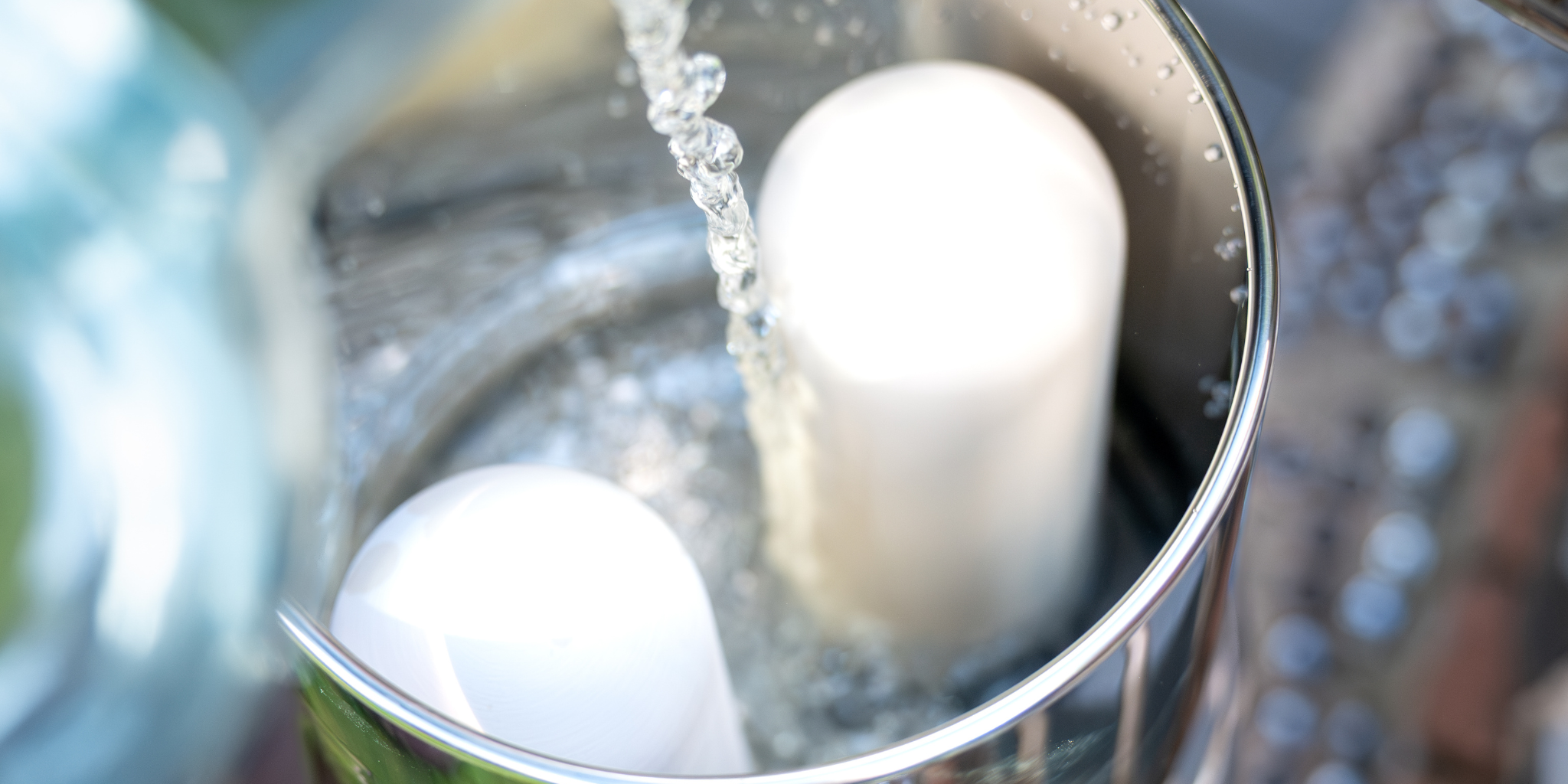
British Berkefeld gravity systems are designed to provide exceptional quality filtered water through the science of ceramic filter elements. If you're new to using a gravity water filter system, you may notice that it filters at a steadier pace than jug-style filters or pressurised systems. This is because gravity filtration relies on the natural force of gravity, allowing water to pass through the filter media without the need for pumps or pressure. Understanding how your system works will help you optimise its performance, set the right expectations, and quickly resolve any issues that may affect filtration speed.
The benefits of ceramic water filters
Ceramic water filters are perfect for those who are looking for a sustainable and proven way to filter their water. Made from natural materials, our ceramic candles use minimal plastic and can easily be disposed of when it comes to changing your filter elements, with a lower impact on landfill. The distinctive filter shape is carefully designed for optimal water flow and effective filtration, and when combined with our British Berkefeld gravity system, you can enjoy great-tasting water without the use of plumbing or electricity.
Understanding the science behind the ceramic
British Berkefeld ceramic water filters come in two options: Ultra Sterasyl and Ultra Fluoride. They both work by using the natural power of ceramic and activated carbon to deliver cleaner, better-tasting water. Our Ultra Fluoride filters also have additional media inside that can help reduce fluoride and other heavy metals in your drinking water.
How does it work? Well, think of the ceramic like a fine 3D sieve with a convoluted path through the wall. Any particles that are too large to fit through the pores or navigate the twisted path connecting them will simply get stuck and not pass into your drinking water.
Beyond this, the activated carbon core helps to improve the taste and odour of your water by absorbing contaminants such as chlorine—the culprit of that swimming pool-like smell and taste. Activated carbon also reduces contaminants such as pesticides, pharmaceuticals, and some heavy metals through a process called adsorption. This is where pollutants chemically adhere to the porous surface of the carbon.
How do ceramic water filters work in gravity systems?
With the gravity systems, the water pressure to push particles through the filter comes from gravity. Essentially, the weight of the water above puts pressure on the water below it, pushing it through the microscopic pores of the filter to the carbon core within.
The British Berkefeld Ultra Sterasyl and Ultra Fluoride filters are specially designed for this process, enabling a longer contact time between the filter element and water for the most effective contaminant reduction. This is why filters such as our Ultra Sterasyl are particularly effective at reducing PFAS, as an example. Through independent laboratory testing to a recognised protocol, we have proven that the British Berkefeld with Ultra Sterasyl filters can reduce 95% of combined PFOA & PFOS from your water for the full capacity claimed for your filter element (1500L). Whilst other brands and products, such as filter jugs, may claim PFAS removal, the contaminated water may not have enough contact time with the filter media for the filter to effectively perform throughout the claimed filter capacity due to faster flow rates. So it’s always important when comparing systems to check the test protocol, flow rate, capacity and reduction claims made on the test report for the filters.
Watch the video to learn more...
Tips to optimise the flow of your gravity system
As mentioned, British Berkefeld gravity filters use advanced ceramic filter elements that are designed to provide high-quality filtration. Because of this, the initial flow rate may seem slower than that of some less advanced filters. This is completely normal. After a few flushes and regular use, the ceramic element naturally becomes 'wetter’, allowing the water to flow more efficiently. You'll notice the flow rate improving over time as the filter conditions and reaches its optimal performance.
Here are some additional tips for this process:
- Condition your filters properly by following the instructions supplied with your filters before use to ensure they are fully wet. The first run through of the system may take longer because the filters are dry and full of tiny pores that need to be flooded with water to provide a clear and continuous path through the filter. Conditioning also ensures that any residues from manufacturing are removed to allow water to pass through more efficiently.
- Keep your top tank filled up to below the rim of the top chamber, ensuring that the filters are kept immersed and wet for increased pressure and faster filtration. Just be sure to keep using the filtered water from the bottom chamber to avoid overflow.
-
Be patient—once the candles are conditioned, each filter should run at approximately 1 litre per hour. Flow will naturally slow as the water level drops in the upper chamber due to a decrease in pressure.
Why does my water filter get slower over time?
From time to time, you may notice that the filtration rate can become slightly slower - this is probably because the filter is working and reducing contaminants from your water! Whether you’ve had your system for a while or it's brand new, here are some potential solutions to troubleshoot concerns:
- Clean your filters as per the instructions to maintain optimal performance. Particles, turbidity or other contaminants will become trapped on the surface and in the pores of the ceramic, which leads to a slower flow rate.
- Check that the filters have been installed correctly according to the instructions supplied. The threaded mounts should be pointed downwards, and the washers and wingnuts must be used in the correct position.
- Ensure you regularly fill up the top chamber (which houses the filters) with enough water. At a low level, the water filtration rate will naturally slow due to less filter surface area being in contact with the water and less gravitational pressure. Just be sure to keep using water from the bottom chamber to avoid overflow.
- Check the age of your filters as they become depleted over time. We recommend replacing your ceramic filters every six months, based on typical household usage.
If you ever need additional support or guidance, our team is always delighted to help. Get in touch with our customer services team at filtersales@doulton.com or call us on 0333 340 3600. You can also reach out on our social media channels by searching ‘Doulton Water’.
And don’t forget, you can also take the hassle out of replacing your ceramic filters and benefit from a discount by signing up for our subscription service. You can find out more about our water filter subscription here.


