

In recent years more and more people in the UK are becoming aware that our homes aren’t always the safe havens we assume them to be. Everyday products can contain hidden chemicals that quietly accumulate in the air we breathe, the dust we live with, and the surfaces we touch.
And it’s not just intuition. A recent survey by chemtrust.org shows that almost 70% of UK adults are worried about the impact of harmful synthetic chemicals in the products they use. Many would also change their buying habits if they knew a product contained substances harmful to wildlife or human health.
With this in mind, how you can make simple, low-tox changes that make a real difference to your family’s health and home..
But first, why is toxicity at home such a growing concern?
Modern living brings convenience, but often at a hidden cost:
- globalactionplan.org.uk found that indoor air quality can be worse than outdoor air, with elevated levels of volatile organic compounds (VOCs) like formaldehyde and other air pollutants linked to irritation and respiratory issues, especially in new builds.
- The Guardian claim that Household dust can harbour pesticide residues and chemical mixtures linked to hormonal disruption and cancer. Even in homes that are not close to farmland.
- PFAs and Forever Chemicals, used to make products waterproof or stain-resistant, don’t break down easily and have been found widely in food and environments across Europe, raising wider health concerns.
All of these findings, alongside the growing concerns and helpful advice on social media, help to explain why people are caring more about chemical exposure in the home, and why “low-tox living” is part of a growing cultural shift.
What Does “Low-Tox” Actually Mean?
A low-tox lifestyle is about reducing unnecessary chemical exposure in everyday life. Particularly from sources over which we have the most control. This means making informed, realistic swaps that minimise your family’s exposure and consumption of synthetic chemicals
Simple Top Low-Tox Swaps for Your UK Home:
1. Rethink Cleaning Products
Many conventional cleaners contain VOCs, quats and other chemicals that can irritate lungs and contribute to poor indoor air quality.
Swap to:
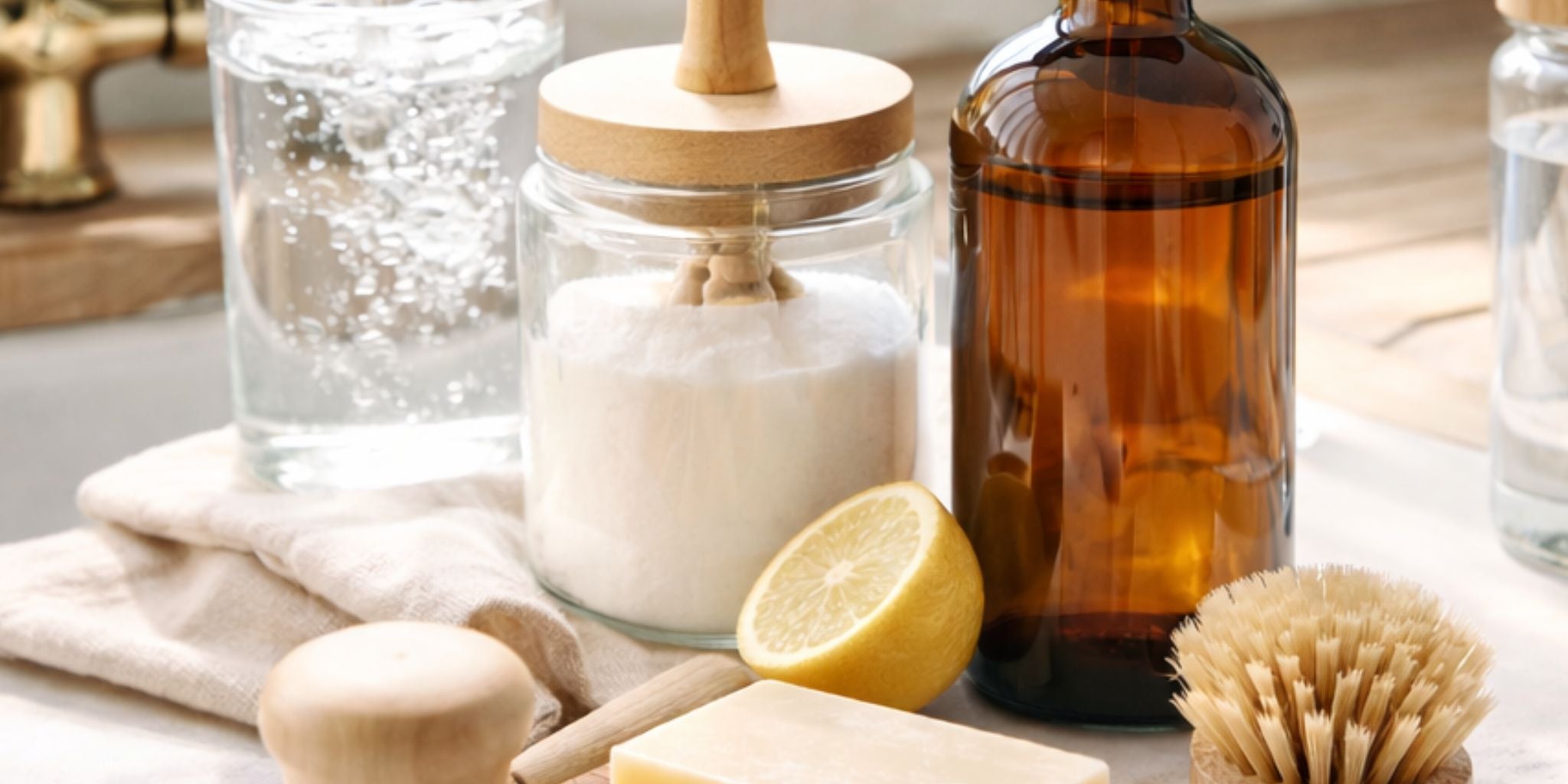
- Plant-based cleaners or DIY mixes (water + white vinegar + citrus essential oil) for general cleaning.
- Microfibre cloths and steam cleaners as effective, chemical-free alternatives.
2. Improve Indoor Air Quality
Pollutants can come from paint, furniture, aerosols and more.
Swap to:
- Regular ventilation by opening windows daily when possible.
- Houseplants like snake plants or English ivy, which may help filter VOCs (though not a standalone solution).
- Avoid using scented candles and airfresheners.
3. Conscious Furniture Choices
Many sofas, mattresses, carpets and shelving contain flame retardants and adhesives that can off-gas into the air.
Swap to:
- Solid wood or certified low-emission furniture.
- Natural fabrics instead of synthetic materials.
4. Kitchen Swaps
Non-stick pans and plastic food containers often contain PFAS or BPA, which are both chemicals linked to health risks.
Swap to:
- Stainless steel, cast iron or PFAS-free ceramic cookware.
- Glass or stainless food storage instead of plastic.
- Water filter system to reduce PFAS consumption.
5. Healthier Personal Care
Scented products and aerosols can release VOCs and other irritants.
Swap to:
- Fragrance-free or naturally scented soaps and deodorants.
- Solid soaps and shampoos with transparent ingredient lists.
Small Changes = Bigger Long-Term Impact.
Going low-tox doesn’t require perfection or completely replacing everything in your home. It’s making small, immediate changes and as items wear out, run out or need replacing, choosing alternatives that can make a difference in the long-term.
As more UK consumers demand transparency and safer products, we’re seeing a ripple effect through retailers and regulators alike. Your choices today are part of a broader movement toward healthier homes and a cleaner future for you and your family.
For more information about contaminants in your home that may be present in your water, read our contaminants guide for more information.


