


News

Celebrating Innovation: Putting Clean Drinking Water At The...
Water is a valuable resource and it is the single factor that brings hundreds of companies from across the world together for the European Aquatech trade exhibition. Held in the first week of November, Aquatech Amsterdam draws companies from 139 countries to showcase, explore and learn all about the latest innovations for water industries. Doulton Water Filters were again proud to be a part of this vast exhibition, which provides a unique window into a huge range of water industries, including treatment, defence, energy provision and, of course, filtration. Check out our water solutions now! Product launch Innovation and development are at the heart of all successful industries and exhibitions such as Aquatech really help to champion that approach with firms using the opportunity to unveil their latest products. Here at Doulton we were delighted to unveil our latest prestige filter - the Royal Doulton ELITE water filter, which combines cutting edge filtration technology in a high-end housing and has been designed specifically for sale in the physical marketplace. Aquatech was also a great chance for Doulton's global partners and customers to connect with each other and strengthen relationships and well as build new ones. Exhibitors are dedicated to maintaining and exceeding the very highest standards in the water industry, ensuring that the people they serve receive the best. Always moving forwards Indeed with Amsterdam being the location for Aquatech, innovation should be expected to be at the top of the agenda. With nearly a third of the Netherlands lying below sea level, the Dutch have a long history of managing, maintaining and harnessing water. Always striving for efficiency and searching for new, cutting edge solutions the Dutch are well known for their dedication to creating the best water systems. Doulton is committed to always working to provide the very best quality of drinking water. Continual innovation and harnessing new technology means anyone using a Doulton water filter can rest assured they are drinking tap water of the highest standards. Check out our water solutions now!
Learn more
The Filtration Story: Tracking Drinking Water From Its...
The ability to turn on a tap and have clean drinking water is a wonder of modern life that a lot of us can take for granted. How much thought do you give to how that water gets there - and what is taken away, or added, on its journey from source to tap? Most importantly, how do we know our drinking water is clean and healthy? Drinking water: The journey What is the journey of water from source to tap? Water, of course, isn't just water when it reaches the treatment plants that eventually pump it to our homes it has a number of contaminants in it. Coming from rivers, reservoirs and lakes, the water that is destined for our drinking glasses can contain a host of bacteria and other pollutants. Groundwater running into waterways can bring with it fertilisers, herbicides and bacteria. Untreated water can also be home to cysts, such as cryptosporidium, which can cause stomach illnesses. Common water contaminants include: Ecoli Typhoid Shigella Nitrates Salmonella Check out our water solutions now! Screens are the first line of defence in removing large objects that have found their way into the water, such as sticks, bricks and leaves, most particles, however, are miniscule and invisible to the human eye. Sand-based filtration and a variety of highly scientific methods are used to push contaminants out of the water, while chemical disinfectants are added to target other bacteria. From these processing plants water is channelled down pipes towards our taps. However at this stage, metals can also become a contaminant through rust particles and old lead pipes. Through this network of pipes drinking water will eventually emerge from your tap - and it is here that you can add your own ultimate layer of protection. Take control of the journey's end with a water filter Installing a water filter will add a comprehensive solution to remove residual particles as well as contaminants that have possibly been picked up along the way. It will also reduce the chlorine used to disinfect the water. Through a five-step filtration system Doulton's ceramic candles remove contaminants to provide fresh, clean and tasty water. Stage 1: Micropores in the ceramic outer shell block pathogenic bacteria, waterborne cysts and particles. Stage 2: Silver used in the filter inhibits the growth of further bacteria. Stage 3: Activated carbon reduces disinfectants, such as chlorine along with organic chemical compounds, such as benzene, to enhance the taste and colour of drinking water. Stage 4: Heavy metals are filtered out by reduction media. Stage 5: Scale inhibitors prevent limescale build up. Doulton water filters have been proven to remove up to 99.99% of contaminants added to treat water as well as heavy metals, pathogenic bacteria and cysts. This lab-tested technology is contained in one small, simple to use ceramic water candle. High standards are set for the quality of drinking water in the UK, but is that enough? Do you want to make sure that your water is as pure as it could be? Tailored to your needs Using a water filter puts you in charge of the water that comes out of your tap. Doulton Water Filters are graded to target specific contaminants that can be of concern to specific areas. As different areas have different concerns regarding their drinking water, Doulton produces a range of water filters allowing you to choose the one most suitable to your needs. For clean, great tasting water that will leave you with peace of mind a water filter is a must. Take charge of your family's health by making sure you are drinking clean, pure and tasty water every time. Check out our water solutions now!
Learn more
How To Take Control of Nitrates Using Doulton...
Nitrates are vital to plants, but do we really want them in our drinking water? The answer is obviously no, but as is the case with too many contaminants, this chemical is finding its way into the water supply. While local authorities do have measures in place to cut the levels of nitrates found in drinking water, this does not remove them completely. Now, however, Doulton Water Filters have unveiled a new water treatment cartridge that can reduce residual nitrates from municipal water supplies. The launch of this new cartridge is an exciting development in Doulton's mission to continue to improve the quality of drinking water to ensure families using a filter have access to the highest quality water on tap. Check out our Nitrate solutions now! What are nitrates? Nitrates are found in various forms and can occur naturally. Nitrates are added to some foods, such as processed meat, and are also naturally occurring in some fruit and vegetables. Nitrates are also vital for plant growth and are commonly used in fertilisers, as well as being found organically in soil. Nitrates used as fertiliser can find their way into the water supply through water run-off caused by excess rainwater, which can see the nitrates washed into rivers and other water sources. Are nitrates in drinking water harmful? Consuming excessive levels of nitrates can be harmful, particularly to very young children. Nitrates only become a problem when they are transformed into nitrites by the body, which can affect the capability of blood cells to move oxygen. The resulting condition - methemoglobinemia - mainly affects babies. The long-term effects of nitrates in drinking water are largely unknown, although consumption of excessive levels of nitrates that are not naturally occurring has been identified as a possible cause of cancer and of methemoglobinemia. When converted to nitrites, nitrates can then become nitrosamines, which are known to be cancer-causing. Targeting nitrates In the UK, standard nitrate limits in drinking water are set at 50 mg per litre, in line with recommendations from the World Health Organisation. Regular tests are carried out and should higher levels are detected, water firms must take action. However, Doulton believes we should all have access to the highest quality water in its most naturalst natural form - as free from contaminants as possible. In our commitment to providing the cleanest water possible, Doulton's newest cartridge can now reduce any nitrates left behind in the municipal water supply. Used as part of a two-step filter system, the new nitrate cartridge will combine with a carbon-containing ceramic candle to give tasty and clean drinking water that is of the very best quality. Don't leave your health to chance; take charge of what is in your drinking water. Use a Doulton water filter to ensure your family has the very best drinking water on tap. Check out our Nitrate solutions now!
Learn more
Clean Drinking Water & The World's Cholera Pandemic
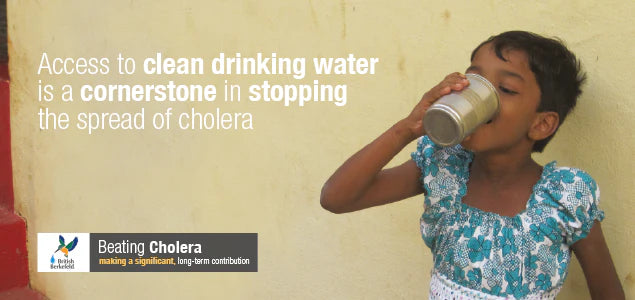
In the developed world cholera is seen as a disease of the past - sadly the very opposite is true for some of the poorest parts of the world. While it has been more than 100 years since the last case of cholera that originated in the UK, Yemen is currently suffering the worst cholera outbreak in history, since modern records began. A huge reason for its spread is communities not having access to clean drinking water. As the disease takes hold, those infected further pollute the water supply through poor or non-existent sanitation accelerating the spread of cholera in the area. The facts are cruel: Cholera is entirely preventable; It is easily treated, yet tens of thousands of people die from it every year; Cholera can kill within hours if not treated; Every year there are between 3 and 5 million cases of cholera - and it is believed many more go unreported; The mortality rate is 1% in treated cases, but half of those who do not receive treatment will die; Young children under five years old are most likely to be affected by cholera; Once cholera strikes in a community it spreads rapidly through poor sanitation. In short cholera is a disease of poverty, it attacks communities where such basic commodities as clean water, medical help and decent sanitation are out of reach. Tackling a global pandemic The world is in the grips of a cholera pandemic - and has been since 1961 - with thousands of cases being reported every day in Yemen and outbreaks across sub-Saharan Africa and parts of Asia. The World Health Organisation has now announced a "roadmap" to tackle Cholera and cut cases by 90 per cent by 2030. Access to clean drinking water is key to the strategy. Where drinking water is mixed with raw sewage, having access to a is essential. This basic level of prevention is the cornerstone in the fight to halt the spread of cholera. Using a water filter will remove harmful bacteria that causes diseases such as cholera, E-coli and salmonella. Check out our Gravity Filter solutions now! Emergency water filters bring hope Charities and organisations worldwide are working to bring clean drinking water to all, introducing simple water filters to communities that are genuinely life-saving, through initiatives such as Give Me Tap Humanitarian teams also make access to clean drinking water a priority in the wake of natural disasters and at refugee camps. A complete, low cost, easy to set up filter system - such as British Berkefeld's Household Filter Kit - offers an immediate but lasting solution. These gravity-fed filter systems do not rely on a power supply and can provide clean drinking water quickly and cheaply in emergency situations, helping to halt the spread of cholera and other water-borne diseases. Products such as these are lightweight, simple to use and effective. Used by aid agencies and charities they bring hope to communities stricken by cholera. The fight for access to clean drinking water is a daily battle for far too many people - targeting the causes of cholera should help to make a real difference. Check out our Gravity Filter solutions now!
Learn more
Single-Use Plastic: Drinking Water Doesn't Have To Cost...
The environmental impact of single-use plastics is finally starting to get the attention needed to tackle this growing problem. Mountains of waste are being washed into the oceans threatening marine life, the environment and ultimately our own health. Thousands of whales, dolphins, seals, sea birds and fish die every year because they mistake plastic for food. Plastic has found its way into the food chain through the fish we eat and has even been found in drinking water. It is a high price to pay for the convenience of picking up a bottle of water, a cup of coffee or a pot of sliced fruit. Check out our refillable Water Bottles now! Ditch single-use plastics - filter and reuse Solutions to avoiding single-use plastics are readily available. Reusable bottles and mugs look better, the water tastes better, you save money and play a part in helping to cut waste. There is no need to compromise. Using a water filter ensures you have the best quality drinking water on tap. Doulton water filters remove harmful contaminants, including chlorine, which can affect the taste of water. They also remove plastic micro-particles. Made from 100 percent natural materials, Doulton ceramic water filters are an ecologically-friendly, permanent solution for access to fresh, clean and great tasting drinking water. Filling a reusable bottle at home with filtered tap water will cut out the need for ever buying a plastic bottle of water. Reusable water bottle organisations can see the bigger picture too. Give Me Tap is a charity that aims to cut the use of plastic bottles and provide clean water to communities in need. Refill and save Then there is the cost to consumers. Bottled water is on average 500 times more expensive than tap water. If you pay £1 every day for a bottle of water that equates to £365 a year, whereas a Doulton filter would be a cost-effective, permanent solution providing top quality drinking water on tap. The Government is now proposing a return and reward scheme for plastic bottles to push up recycling rates. The return value is not yet known but consumers will continue to pay for an off-the-shelf product when they could save by drinking tap water from a reusable bottle. The facts on single-use plastics stand for themselves: More than480 billion plastic bottles were bought across the world in 2016; 8 million tonnes of plastic is dumped into the oceans every year; In the UK, 16 million plastic bottles fail to be recycled every day; 100,000 marine animals and one million seabirds die each year as a result of plastic waste; Plastic can take 450 years to decompose; The average cost of tap water in the UK is 0.1p per litre, compared to 65p for 1 litre of bottled water; Tap water is more rigorously tested than bottled water to ensure its safety. Making simple changes will make a huge difference to the problem of single-use plastics. Use a refillable bottle, and fill it with filtered tap water instead of adding another plastic bottle to the waste pile. Be part of the solution, not the problem. Check out our refillable Water Bottles now!
Learn more
Ceramics & The Clean Water Revolution
The quest to make clean drinking water available for all in the UK has strong links to the potteries industry. When Queen Victoria was concerned about the contents of the drinking water she was being served, it was a ceramic manufacturer she turned to. John Doulton had gone into partnership with Martha Jones and John Watts to create Jones, Watts and Doulton to design and create ceramics in London. This was the very company that would eventually, through various changes, become Royal Doulton. Check out our water solutions now! Embracing technology and industrialisation from an early point, Jones, Watts and Doulton began creating ceramic water filters in the late 1820s. At the time, drinking water in London was drawn from the filthy River Thames, which was polluted with raw sewage, and cholera and typhoid were rife. Making a name for themselves as innovators, Jones, Watts and Doulton were called upon to create water filters for the royal household. Now, more than 185 years later, ceramic remains an unbeatable base through which to filter contaminants from drinking water and is still the bedrock of Doulton Water Filter's success in providing clean, top quality drinking water across the world. Innovation in ceramic technology Jones, Watts and Doulton became Doulton and Co. in 1854, and continued to bring cutting edge technology to ceramic wares, as well as creating world famous pottery. In 1901, Doulton and Co was honoured with the royal warrant and granted the right to use "Royal". Standards remained high across the range, and in 1904, after extensive research, the firm introduced its range of porous porcelain filter candles, providing ever more effective protection from contaminants found in drinking water. This dedication to quality and innovation remains today, as Doulton Water Filters continues to focus on enabling families to enjoy the best quality drinking water by removing and reducing potentially harmful contaminants Doulton & Co opened a base in Staffordshire at the end of the 1800s and became synonymous with The Potteries. Doulton saw great changes in the business across the years as it was split into divisions and ultimately filtration and tableware became separate entities under the ownership of different companies. Tried, tested and trusted Doulton Water Filters have now been helping to save lives by filtering harmful contaminants from drinking water for more than 185 years. Made from natural earths and providing up to 99.99% filtration of pathogenic bacteria, cysts and particles from drinking water, Doulton ceramic provide people across the world, whatever their situation, with drinking water filters that perform consistently every time - giving them clean, healthy, great-tasting water from almost any fresh water source. The headquarters for Doulton Water Filters are still based in Staffordshire, near to The Potteries. Check out our water solutions now!
Learn more
Cryptosporidium: Protect Yourself From This Major Cause of...
The very last thing anyone wants from drinking water is to become unwell - but this is what can happen if certain contaminants are not effectively removed. Cryptosporidium is a water-borne cyst that is found in human and animal faeces; it can cause painful stomach illness if it finds its way into your body. A very resilient parasite, cryptosporidium can hang around for a long time and as such, find its way into the water system. It is a very common contaminant. Check out our water solutions now! What effect can cryptosporidium have on health? Even if ingested in only small quantities, cryptosporidium can cause cryptosporidiosis, a painful stomach upset that is often accompanied by respiratory illness. A person who has become infected by the parasite will suffer diarrhoea and a persistent cough. A major problem with cryptosporidium infection is that it is relatively easily passed on to other people. The infection also remains in the body for up to five weeks. Cryptosporidium is a major cause of diarrhoea. Cryptosporidiosis can be very serious, even life-threatening, in the case of people with a compromised immune system. Why is cryptosporidium a problem in drinking water? Unfortunately, the tough nature of cryptosporidium means it is also resistant to standard water disinfection methods such as the use of chlorine. Instead water authorities have to rely on alternative methods, such as filtration plants, to get rid of the parasite. In the wake of outbreaks in the UK in 1989, and again in 2005, the Government tightened up guidelines requiring drinking water to be monitored and efficient disinfection processes put in place. The dual approach acts as a double safety measure but alerts are still possible. In 2015, 300,000 homes in Lancashire were told to boil their drinking water over concerns there was cryptosporidium in the supply. As well as finding its way into the drinking water supply, outbreaks of cryptosporidiosis have been linked to swimming pools, farm animals, eating contaminated food and children's nurseries. What can you do to protect against cryptosporidium? Water filters are an excellent way to remove Cryptosporidium from drinking water. Doulton Water Filters have been scientifically proven to remove more than 99.99% of cryptosporidium from water - this level is known as absolute filtration. Why leave your health up to chance when a using water filter could give you the choice to have the best quality drinking water on tap all the time. Stop cryptosporidium in its tracks with a Doulton water filter. Check out our water solutions now!
Learn more
Plastic in Water: Do Water Filters Remove Plastic...
The environmental impact of plastic waste has long been a concern, but the latest research has ratcheted up alarm levels after discovering plastic micro-particles were now in drinking water. Check out our water solutions now! What are the health risks of plastic in water? Using a water filter will add an extra layer of protection to domestic drinking water supplies. The big problem when it comes to ingesting contaminants such as plastic micro-particles is that research into cause and effect takes time to establish what the health risks will be. At this early stage, there is no specific research to outline what the health risks may be. What we do know is that we would not willingly choose to consume tiny particles of plastic. Studies have indicated that BPA (Bisphenol A), which is a common component in plastics, could affect birth weight, development, obesity and the hormonal system. Some countries have now taken steps to limit their use. There is also a concern that plastic micro-particles in drinking water could act as "carriers" by bonding with harmful contaminants, such as chemicals or heavy metals, and transport these into the water. If it is finding its way into drinking water, there is a very real chance that plastic micro-particles could be absorbed into our bodies, the effect of which is presently unknown. How bad is the problem? In a recent report, The Guardian shared findings that 83% of tap water tested as part of a global survey was found to contain "plastic fibres". Of those areas tested 94.4% of water in the USA was contaminated - the highest in the study. In Europe the figure was 72%. How are plastic microfibres getting into drinking water? Plastic plays a huge part in our everyday lives and is used for a massive variety of products. As a result of this, there is a global problem with plastic waste, which takes hundreds of years to decompose. Plastic waste makes its way into the waterways - and the world's oceans - where it remains. Experts also point to washing machines emitting plastic fibres from clothes, and there have been studies that indicate so much plastic is being used that particles are even found in the air - naturally, these can pollute waterways too. Our plastic water filter systems will add an extra layer of protection to domestic drinking water supplies. What can we do? Due to the light density of plastic particles, there is a concern that these are not being removed from drinking water at the disinfection stage, along with other contaminants. To protect yourself and your family, the best step to take is to use a water filter. Doulton Water Filters have been scientifically proven to remove plastic particles from drinking water, down to as small as 0.5 microns. The water filters will also remove many other contaminants, allowing you peace of mind over the quality of the water your family is drinking. You can also help to cut plastic waste by using a reusable stainless steel or glass water bottle, filled with filtered water from home. At the end of the day, every little action helps to reduce plastic pollution. Don't take any chances with your family's health; use a Doulton Water Filter to guarantee the best quality, clean drinking water straight from your tap. Check out our water solutions now!
Learn more
Give Me Tap: How Refilling On-The-Go Is Bringing...
Everyone should have access to clean drinking water - that is the ethos that underlines the work of "Give Me Tap". Working in a perfect cycle, this initiative links members of the public to a network of establishments where they can feel at ease requesting water refills for their BPA-free ˜Give Me Tap™ bottles by using an app to map out partners. How Give Me Tap is helping to fund a global solution From the money paid for these reusable stainless steel bottles, Give Me Tap donates 20 per cent to funding projects to bring clean drinking water to communities in Africa. That 20 per cent donation is enough to pay for access to clean drinking water for one person for five years. To date, the project has completed 20 water projects - mainly in Ghana - bringing clean drinking water to thousands of families. Not only is Give Me Tap bringing an essential resource to those desperately in need, it is also giving people ready access to free drinking water - and cutting down on the environmental cost of buying water in plastic bottles. 100 per cent support Its ethos is admirable and one that Doulton Water Filters is proud to be supporting. Access to clean water is essential to life and wellbeing, and the leap from making tap water easily available wherever you are, to bringing this life-source to communities in dire need is an initiative that deserves and demands support. Doulton is proud to give its 100 per cent backing to the cause and is now selling Give Me Tap bottles in support of it, directing all profits straight back to Give Me Tap. To underline Doulton Water Filter's commitment to this cause, we will also be offering a 10 per cent discount on any water system when bought alongside a Give Me Tap bottle. Quality counts: Use a water filter for better taste and well-being At Doulton, we believe that everyone should have access, on tap, to the best quality water possible. Drinking water that has been filtered using a Doulton system will be the best quality, in terms of both taste and well-being. Doulton's unique ceramic filters meet the highest standards to reduce the presence of and disinfectants in drinking water, including lead, salmonella, E. coli and chlorine. Our message is this: Give Me Tap - but make it Doulton filtered Check out our water solutions now!
Learn more