

*Tot 25% korting op alleen geselecteerde artikelen, exclusief filterelementen. Algemene voorwaarden zijn van toepassing. Eindigt op 14/04/26.
Doulton keramische waterfilters
ONTDEK ONS ASSORTIMENT WATERFILTRATIEOPLOSSINGEN
Verkoper: British Berkefeld
British Berkefeld® roestvrijstalen zwaartekrachtsysteem + Ultra Sterasyl keramische filters
Verkoper: Doulton
Doulton® EcoFast waterfiltersysteem voor onder de gootsteen met Biotect Ultra
Verkoper: Doulton
Doulton® Countertop-waterfiltersysteem met Biotect Ultra®
Verkoper: British Berkefeld
British Berkefeld® roestvrijstalen zwaartekrachtsysteem + keramische ultrafluoridefilters
Verkoper: British Berkefeld
British Berkefeld® roestvrijstalen zwaartekrachtsysteem + Ultra Sterasyl keramische filters
Verkoper: British Berkefeld
British Berkefeld® 1 liter roestvrijstalen zwaartekrachtsysteem en Ultra Sterasyl®
Verkoper: British Berkefeld
British Berkefeld Roestvrijstalen tapkraan met waterniveaumeter
Verkoper: Doulton
De ultieme Doulton-startbundel
Verkoper: Doulton
Doulton® EcoFast waterfiltersysteem voor onder de gootsteen met Biotect Ultra
Verkoper: Doulton
Doulton® HIS Push-fit waterfiltersysteem voor onder de gootsteen met Biotect Ultra®
Verkoper: Doulton
Doulton® HIP DUO waterfiltersysteem voor onder de gootsteen met Biotect Ultra®
Verkoper: British Berkefeld
Het ultieme British Berkefeld Startersbundel
Verkoper: British Berkefeld
British Berkefeld® roestvrijstalen zwaartekrachtsysteem + Ultra Sterasyl keramische filters
Verkoper: British Berkefeld
British Berkefeld® 1 liter roestvrijstalen zwaartekrachtsysteem en Ultra Sterasyl®
Verkoper: Doulton
Doulton® Countertop-waterfiltersysteem met Biotect Ultra®
Verkoper: Doulton
Doulton® Biotect Ultra® (2501)
Verkoper: Doulton
Doulton® Biotect® UltraSI (2505)
Verkoper: British Berkefeld
British Berkefeld® Ultra Sterasyl® (8674)
Verkoper: British Berkefeld
British Berkefeld® Ultrafluoride (8B76)
Ik ben vorig jaar begonnen met het gebruik van het zwaartekrachtfiltratiesysteem en de kwaliteit en frisheid van het water zijn verbazingwekkend. Ik heb een abonnement, dus ik hoef me nooit zorgen te maken over het bestellen van de nieuwe filters. Een echte aanrader, 5 sterren
Water uitzonderlijk maken sinds 1826.
Ervaar 200 jaar expertise met het assortiment waterfiltersystemen en filtratieoplossingen van Doulton Water Filters.
Door de kracht van keramische waterfilters te benutten, maken wij van gezond water het hart van uw huis. Van de discrete en eenvoudig te installeren Doulton onder gootsteen waterfiltersystemen, voor het gemak van ons waterfilter op aanrecht en British Berkefeld bereik van zwaartekrachtfilters. Onze producten zijn ontworpen om een aantal voorkomende verontreinigingen om de smaak te verbeteren en gemoedsrust te bieden in elke druppel van uw drinkwater.
Ontdek onze gids voor een waterfilter kiezen om te ontdekken welk systeem bij uw wensen past.
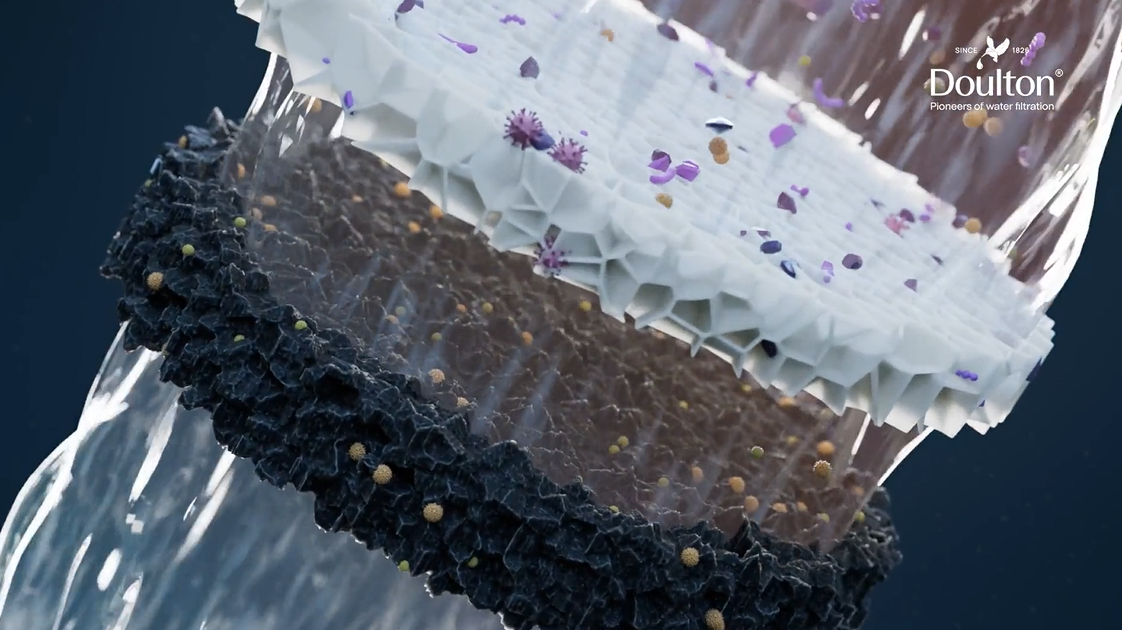
Wat is de wetenschap achter keramiek?
Ontdek wat keramische waterfilters zijn en hoe ze werken op onze pagina keramische filtergeleider. Met bijna 200 jaar ervaring in het perfectioneren van de prestaties van onze filters, is er meer dan op het eerste gezicht lijkt als het gaat om het leveren van water van uitzonderlijke kwaliteit in al onze Doulton-waterfiltersystemen.
Onze Ultieme gids voor waterfilters zal u ook helpen de opties te begrijpen als het gaat om uw reis met gefilterd water.
Ontdek onze merken
Doulton waterfilter systemen bieden uitzonderlijke kwaliteit en gemoedsrust voor uw gezin. Met een reeks waterfiltratieoplossingen voor elke levensstijl of huishouden kunt u ons assortiment onder de gootsteen, aanrecht en draagbare opties hier op onze officiële website verkennen.
Onderdeel van de Doulton-familie, British Berkefeld filters zijn gebaseerd op het rijke erfgoed en de expertise van Doulton. Ontdek ons assortiment met behulp van een eenvoudig maar effectief op zwaartekracht gebaseerd systeem British Berkefeld systemen hier op onze officiële website.
Lees onze nieuwste artikelen
Can a Netflix-Inspired Plastic Detox Really Work?
Concerns about plastic exposure and its effects on human health have risen sharply recently. As uncertainty around the long-term implications continues, a growing body of research is emerging, increasingly highlighting the risks associated with the microplastics and nanoplastics we encounter and often consume throughout our daily lives. Netflix's most recent documentary, “Plastic Detox", features a fascinating real-world experiment that has brought the issue into an even sharper focus. For couples trying to conceive, this topic is particularly relevant, as emerging research suggests environmental factors, including everyday plastics, could be playing a much bigger role in fertility than previously thought. Plastics Aren’t Just an Environmental Concern. They also pose a significant risk to human health. Many plastics contain chemicals such as phthalates, which make them flexible, and bisphenols like BPA, which make them rigid. These substances are known as endocrine disruptors, meaning they can interfere with the body’s hormonal system, affecting key functions like fertility, metabolism, and growth and development. What makes this particularly concerning is how easily these chemicals can enter the body through the food and drink we consume, via skin absorption (which can account for up to 60% of exposure), and even through the air we breathe in the form of microplastics. The Bigger Picture: What Research Shows Scientific studies back up the concerns: A landmark Danish study found a 50% decline in sperm count over 50 years Newer data suggests the decline is accelerating Exposure to phthalates in infancy is linked to future fertility issues Over 50 chemicals act as “obesogens”, contributing to weight gain BPA may affect multiple generations, not just one There’s also emerging evidence linking plastic chemicals to: Cardiovascular disease ADHD and autism Hormone-related cancers The Netflix Study: Can Reducing Plastics Improve Fertility? Six couples who had been struggling to conceive due to "unexplained infertility" after medical testing took part in a three-month experiment. The hypothesis was simple: If we reduce exposure to plastic chemicals, can fertility improve? Participants were tested for: Bisphenol A (BPA) Phthalates Sperm count and concentration (male partners) Since sperm takes around 70 days to regenerate, the study tracked changes over a 3-month period to see whether lifestyle adjustments made a measurable difference. Real Results from Real Couples The outcomes were striking and, for some of the couples featured, life-changing: Monique and Bruno (2 years trying)Bruno (a construction worker) changed aspects of his home and work environment and saw an 84% increase in sperm concentration. The couple later had their first child and are expecting another in 2026. Julie and Eric (2.5 years trying)Despite Eric being classified as subfertile, the couple successfully conceived. Their baby was born in early 2026. Katie and Tim (10 years trying)No improvement was observed in this case. A reminder that fertility is complex and multi-factorial. Darby and Jesse (22 months trying)Initially showed extremely high BPA and phthalate levels. After just 6 weeks: Darby’s BPA dropped by 95% Both partners saw significant chemical reductions They later conceived and welcomed a baby in 2026. Overall, 50% of couples featured conceived after the study, and after 6 weeks, all of the couples showed a decrease in BPA of 61.5%, making it almost non-detectable. Phthalates also declined by 6.25%. Along with fertility, a third of the participants saw a lower BMI; 60% reported higher energy levels; 80% reported increased sleep quality; and 86% said they planned to keep the lifestyle changes. What Changed? (The “Plastic Detox” Approach) Rather than eliminating everything, participants focused on reducing the largest sources of exposure in their everyday lives. Key Changes: Avoiding plastic food and drink packaging Switching to natural, fragrance-free personal care products Reducing exposure to synthetic fabrics Avoiding thermal receipts (a hidden BPA source) Replacing common household items with plastic-free alternatives Common Plastic Sources in Our Homes: Of course, plastic regulations vary around the world. The Plastic Detox featured couples based in America. So, it's important to note, while the UK and EU follow frameworks like REACH (Registration, Evaluation, Authorisation, and Restriction of Chemicals), with 1,100 chemicals banned in EU cosmetics compared to just 9 in the US, there are still common places where plastics can be found throughout our homes. Such items can include: Plastic bottles and food packaging Tea bags (many contain plastic fibres) Coffee pods Shampoo and toiletry bottles Cleaning products Synthetic clothing (polyester, nylon) Plastic chopping boards Children’s toys Fragrances and cosmetics How to Reduce Exposure to Microplastics Around Your Home: You don’t need to overhaul your entire lifestyle overnight to reduce plastic exposure. In fact, small, consistent swaps can make a meaningful difference. A wonderful place to start is in the kitchen, where plastics are often most heavily used. Switching to glass or stainless steel containers for food storage, choosing wooden or bamboo chopping boards, and avoiding plastic kettles or containers where possible can all help lower your exposure to harmful chemicals. Consider investing in a water filter system to further reduce your consumption. This is particularly important if you and your family frequently use plastic bottles instead of tap water to lower microplastics in water. It’s also worth looking at your daily routine. Many personal care products contain hidden plastics or synthetic fragrances, so opting for fragrance-free toiletries and products in plastic-free or refillable packaging is a simple but effective change. Clothing is another often-overlooked source of microplastics, so where possible, choosing natural fibres like cotton or wool can help reduce both personal exposure and environmental impact. Try not to buy polyester or waterproof clothing where possible, as these may also contain avoidable plastic particles and chemicals. Finally, being aware of less obvious sources of plastic can go a long way. Even everyday items like receipts often contain BPA, so limiting how often you handle them is a good habit to build. When food shopping, choosing loose fruit and vegetables instead of pre-packaged options can significantly cut down plastic use. Even something as simple as checking whether your tea bags are plastic-free can contribute to a lower overall exposure. While these tips may sound a little overwhelming, with plastic appearing to be present in almost everything we touch, it's still important to note that, like everything in life, smaller, more manageable changes are still beneficial for longer-term goals. Will You Reduce Your Plastic Exposure? The biggest takeaway from the 'Plastic Detox' isn’t perfection; it’s awareness. For UK families, especially those trying to conceive, reducing plastic exposure could be a simple but powerful step toward better health. While fertility is influenced by many factors, this study suggests something encouraging: Everyday choices, even small ones, may have a bigger impact than we think.
Microplastics in water
Microplastics in water Met deze blog willen we licht werpen op de schadelijke effecten van microplastics. Ga met ons mee terwijl we ons verdiepen in de diepgaande impact die deze kleine deeltjes hebben op het milieu en het menselijk welzijn. Aan het einde van dit artikel geven we je praktische tips om microplastics uit je water te verwijderen, zodat je een zuiverdere en gezondere drinkervaring krijgt. Ontdek de verborgen gevaren van microplastics en zet stappen richting een schonere toekomst! Helaas vormt de escalerende aanwezigheid van plasticvervuiling in zoetwatersystemen en terrestrische omgevingen een onmiddellijke bedreiging voor zowel het menselijk welzijn als de ecologische stabiliteit.1. Gezien de alomtegenwoordigheid van kunststoffen in vrijwel elk facet van het menselijk bestaan, is het onvermijdelijk dat individuen in hun dagelijks leven consequent worden blootgesteld aan de aanwezigheid van microplastics.2. Wat zijn microplastics in water? Microplastics, kunstmatige polymeren die op natuurlijke wijze niet afbreken en een diameter hebben van minder dan 5 mm, vormen een groot probleem3. Microkralen (4. Volgens Earth.orgUit de bevindingen blijkt dat de jaarlijkse instroom van plastic afval in de oceanen de 8 miljoen ton overschrijdt. Microplastics ondergaan, net als alle andere vormen van plastic, een afbraakproces van honderden of zelfs duizenden jaren. Deze minuscule deeltjes doordringen elk hoekje en gaatje van onze omgeving en omvatten de lucht, de bodem en het water. Microplastics in drinkwater, oceanen, poolgebieden en zoet water blijken aanzienlijke hoeveelheden gevaarlijke stoffen te bevatten. Deze vervuiling heeft geleid tot de erkenning dat de inname van microplastics via voedsel en water een belangrijke blootstellingsroute is. Deze kleine deeltjes zijn aangetroffen in verschillende monsters van veelgebruikte zeevruchten, flessenwater, kraanwater, honing en zelfs zout5. Het effect van microplastics in water en aquatische systemen heeft verstrekkende negatieve gevolgen. Dit komt vooral omdat kunststoffen, zodra ze in het mariene milieu terechtkomen, honderden en zelfs duizenden jaren kunnen blijven bestaan6. In het mariene milieu is plastic verantwoordelijk voor ongeveer 60-80% van het afval in zee7. Zitten er microplastics in leidingwater? Rivierwater is een waardevolle hulpbron voor de productie van drinkwater8. De toenemende bezorgdheid draait echter om de aanwezigheid van microplastics in drinkwater, omdat de inname ervan potentiële gezondheidsrisico's voor de mens met zich meebrengt. Het is cruciaal om niet over het hoofd te zien dat microplastics in drinkwater voorkomen. De omvang van microplastics in drinkwater hangt vooral af van de initiële concentraties die worden aangetroffen in de inname van ruw water en de specifieke behandelingsmethoden die worden toegepast in drinkwaterzuiveringsinstallaties9. Drinkwaterzuiveringsprocessen zijn essentieel om een adequate waterkwaliteit te garanderen, maar ze zijn niet volledig efficiënt in het verwijderen van microplastics, aangezien de verwijdering van microplastics tussen de 70% en 82% ligt.10. Momenteel bestaat er geen wettelijke limiet voor het microplasticgehalte in drinkwater, noch enige behandelingstechnologie die rechtstreeks gericht is op de verwijdering van microplastics.11. Ondanks de algemene aannames over de zuiverheid van flessenwater, vraagt u zich misschien af: bevat flessenwater minder microplastics? Recent onderzoek uitgevoerd door Cherniak et al. in 2022 onthult een onverwachte bevinding: flessenwater zou mogelijk hogere niveaus van microplastics kunnen bevatten12. De Wereldgezondheidsorganisatie (2019) heeft gemeld dat er wereldwijd een groeiende belangstelling is om het voorkomen van microplastics in flessenwater te kwantificeren13. Vervuiling door microplastics is een mondiaal probleem voor de menselijke gezondheid geworden, omdat microplastics opkomende verontreinigende stoffen zijn. Om het bewustzijn over dit probleem te vergroten, heeft de herziene Europese drinkwaterrichtlijn plannen om microplastics tegen 2024 op de ‘watchlist’ van opkomende verbindingen te zetten.14. Hoe zich te ontdoen van microplastics in water. Als je wilt weten hoe je microplastics in water kunt vermijden, is het tijd om je water te gaan filteren met Doulton. Doulton waterfilters bieden het gemak van het drinken van schoon kraanwater dat de smaak van flessenwater evenaart. Uitgebreide onderzoeken naar microplastics in drinkwater hebben vooral gekeken naar deeltjes met een grootte van 6,5 tot 100 micron. Echter, Doulton waterfilters gaat nog een stap verder door een absolute filtratie (gedefinieerd als >99,99%) van 0,9 micron en een nominale filtratie (gedefinieerd als >99,9%) van 0,5 tot 0,8 micron uit uw drinkwater te bieden. Dit maakt ze een uitstekende keuze voor gezinnen die zekerheid willen over de kwaliteit van hun drinkwater. Hoewel de onderzoeksresultaten ongetwijfeld zorgwekkend zijn, hebben individuen de macht om zichzelf te beschermen en hun bijdrage aan plastic afval voor eenmalig gebruik te verminderen door ervoor te kiezen geen flessenwater te kopen. Bekijk nu onze wateroplossingen! Referenties 1. Sharma, VK, Ma, X., Lichtfouse, E., & Robert, D. (2022). Nanoplastics zijn potentieel gevaarlijker dan microplastics. Milieuchemiebrieven, 1-4.2. Kirstein, I.V., Gomiero, A., & Vollertsen, J. (2021). Microplasticvervuiling in drinkwater. Huidige mening in de toxicologie, 28, 70-75.3. Dronjak, L., Exposito, N., Rovira, J., Florencio, K., Emiliano, P., Corzo, B., ... & Sierra, J. (2022). Screening op microplastics in water- en slibleidingen van een drinkwaterzuiveringsinstallatie in Catalonië, Spanje. Wateronderzoek, 225, 119185.4. Wu, W. M., Yang, J., & Criddle, C. S. (2017). Vervuiling door microplastics en reductiestrategieën. Grenzen van milieuwetenschappen en techniek, 11, 1-4.5. Dronjak, L., Exposito, N., Rovira, J., Florencio, K., Emiliano, P., Corzo, B., ... & Sierra, J. (2022). Screening op microplastics in water- en slibleidingen van een drinkwaterzuiveringsinstallatie in Catalonië, Spanje. Wateronderzoek, 225, 119185.6. Isaac, MN, & Kandasubramanian, B. (2021). Effect van microplastics in water en aquatische systemen. Milieuwetenschappen en vervuilingsonderzoek, 28, 19544-19562.7. Du, S., Zhu, R., Cai, Y., Xu, N., Yap, P. S., Zhang, Y., ... & Zhang, Y. (2021). Het lot van het milieu en de impact van microplastics in aquatische ecosystemen: een overzicht. RSC-voorschotten, 11(26), 15762-15784.8. Eerkes-Medrano, D., Leslie, H.A., & Quinn, B. (2019). Microplastics in drinkwater: een overzicht en beoordeling. Huidige mening in milieuwetenschappen en gezondheid, 7, 69-75.9. Dalmau-Soler, J., Ballesteros-Cano, R., Ferrer, N., Boleda, M.R., & Lacorte, S. (2022). Microplastics in een leidingwatervoorzieningsnetwerk. Water- en milieujournaal, 36(2), 292-298.10. Kirstein, I.V., Hensel, F., Gomiero, A., Iordachescu, L., Vianello, A., Wittgren, H.B., & Vollertsen, J. (2021). Drinkplastics? – Kwantificering en kwalificatie van microplastics in drinkwaterdistributiesystemen door µFTIR en Py-GCMS. Wateronderzoek, 188, 116519.11. Novotna, K., Cermakova, L., Pivokonska, L., Cajthaml, T., & Pivokonsky, M. (2019). Microplastics in de drinkwaterzuivering: huidige kennis en onderzoeksbehoeften. Wetenschap van het totale milieu, 667, 730-740.12. Cherniak, S.L., Almuhtaram, H., McKie, M.J., Hermabessiere, L., Yuan, C., Rochman, C.M., & Andrews, R.C. (2022). Conventionele en biologische behandeling voor het verwijderen van microplastics uit drinkwater. Chemosfeer, 288, 132587.13. Wereldgezondheidsorganisatie. (2019). Microplastics in drinkwater. Genève: Wereldgezondheidsorganisatie.14. EU, 2020. Richtlijn (EU) 2020/2184 van het Europees Parlement en de Raad van 16 december 2020 betreffende de kwaliteit van voor menselijke consumptie bestemd water (herschikking) (Voor de EER relevante tekst). PB L 435 van 1–62 van 23.12.2020.15. Eerkes-Medrano, D., Leslie, H.A., & Quinn, B. (2019). Microplastics in drinkwater: een overzicht en beoordeling. Huidige mening in milieuwetenschappen en gezondheid, 7, 69-75.
Does All Water Taste the Same?
What happens when a wine expert turns their taste buds to tasting water? Discover the ultimate taste test with Haydn Squibb here on the Doulton Water Filters blog!
How Filtered Water Can Enhance Chinese Tea
Chinese tea culture spans thousands of years, blending craftsmanship and wellness with everyday rituals. From delicate green teas to deeply aged dark teas, each variety offers unique flavours and health benefits. Enjoyed as part of meals and throughout the day, there are a range of popular teas that can benefit a multitude of lifestyles in a variety of ways. Whilst Chinese tea is some of the best quality in the world, due to a combination of geography, biology, culture, and time that no other place has all at once, there’s one often-overlooked factor that can enhance any cup. And that is the water quality. Let’s explore the main types of Chinese tea, what they’re known for, and why using filtered water can dramatically improve both taste and the experience. Green Tea and its Benefits Green tea is one of the most well-known teas for hailing from China. Unoxidised and quickly heated after harvest, green tea retains a fresh, earthy flavour. It is available as leaves or sometimes in tea bag form from our supermarkets. Rich in antioxidants (especially catechins) Supports your metabolism Known to benefit heart health Provides a gentle, steady release of energy Oolong Tea and its Benefits Partially oxidised and sitting between green and black tea, Oolong tea has a slightly floral and toasty flavour. This tea is great for slow sipping and enjoying over long conversations. Supports digestion by breaking down oily food Boosts metabolism Has been associated with improved cholesterol balance Rich in antioxidants May help with oral health with natural polyphenols Black Tea – Also Known as Red Tea – and its Benefits Often called Red Tea due to its colour when brewed, Black Tea is fully oxidised, with the leaves developing rich flavours like malt, honey, cocoa and dried fruit. This makes it naturally less grassy and less bitter than green tea, which is why those new to tea usually enjoy it more. Pairs well with a variety of food Tastes great with milk or lemon, but can also be enjoyed without Provides a gentle energy boost without being harsh Brews more easily than most other teas How does filtered water help tea? Filtered water actually makes a big difference for all types of tea. Whether it's Green, Oolong, Black or Red! Here's how: Clearer Flavour: Tap water has a range of contaminants in it, such as chlorine, heavy metals and microplastics that can taint the natural floral or roasted notes of tea. Filtered water helps to reduce these contaminants to let the true flavour shine through. Crisper Fragrance: A lot of tea can rely heavily on scent to maximise the experience. Removing contaminants in your water helps the fragrance open up and adds an extra layer of crispness. Prevents Cloudiness: Contaminants in unfiltered water can react with tea polyphenols, making the brew look murky. Filtered water keeps your hot beverages clearer in every cup. Consistency: Ensuring that every brew is steeped to perfection, using filtered water provides consistent filtering results that also make your tea taste perfect every time. So, whether you're exploring Chinese Tea for the first time or looking for ways to enhance an established daily ritual, investing in a water filter system is the best way to get the most out of your cup today!


